SF Real Estate Heats Up as the Weather Cools Down

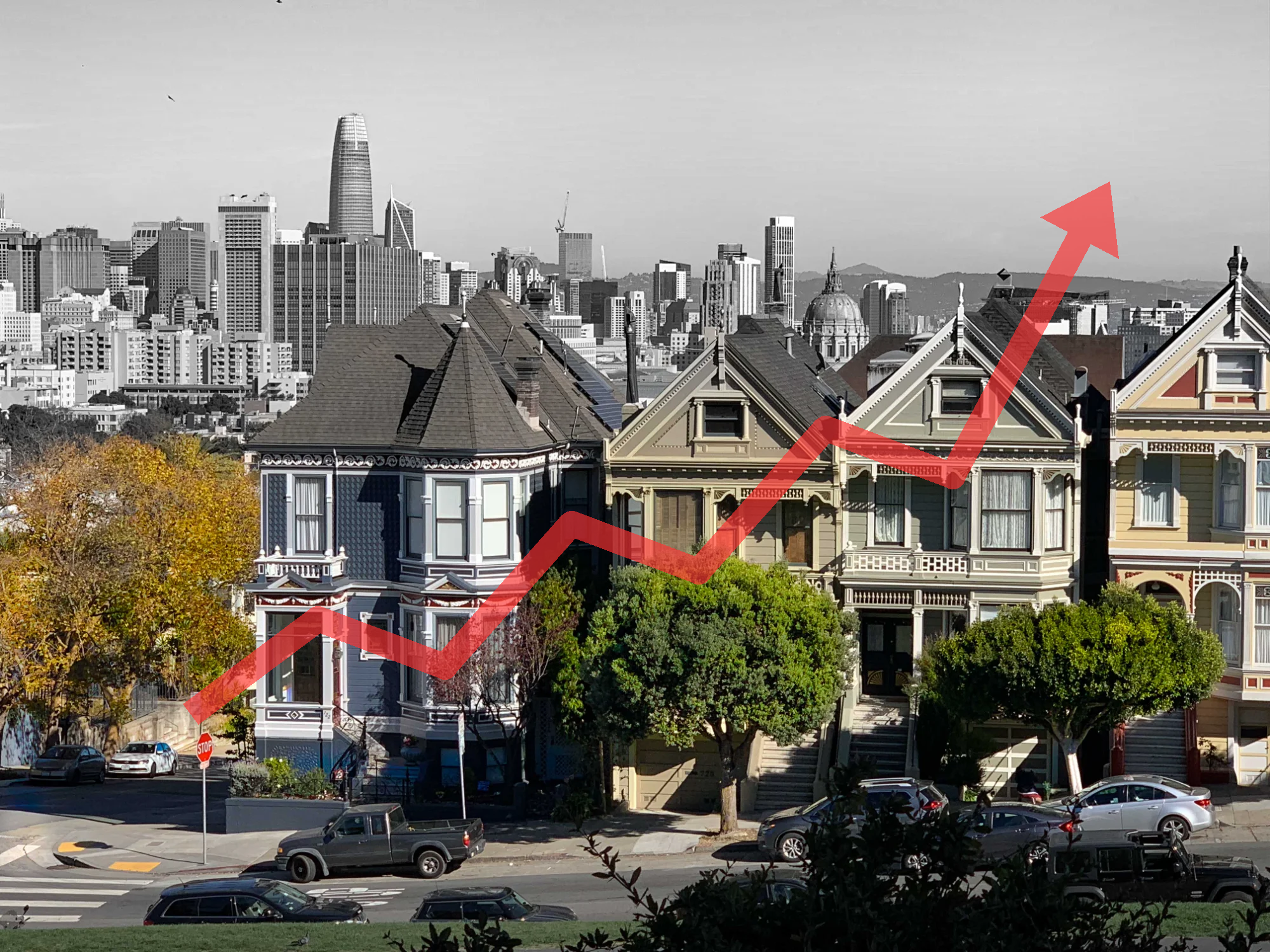
Generated with Claude.ai using a photo taken by Misha Weidman
Image Generated with Claude.ai

In my last post, I wrote that San Francisco’s residential market, fueled by the booming economics of local AI companies, was bucking the trend of most Bay Area counties by showing clear signs of strength while other counties stayed flat or faltered.  Recent data suggests that this trend could be accelerating.

In Contract, Pendings, Sales Volume All Up

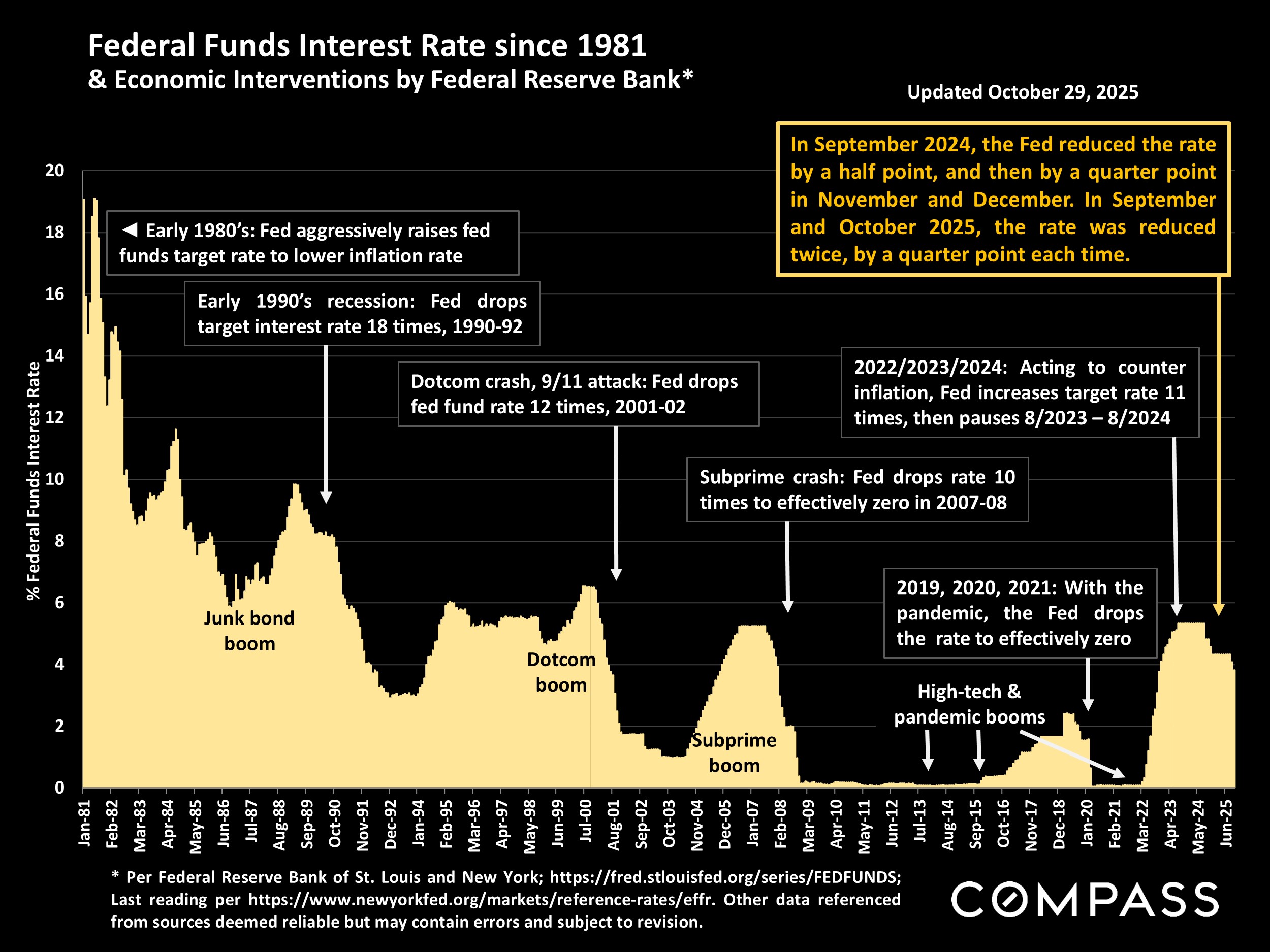
First, let’s recall that the music stopped in Spring, 2022, when the Fed started aggressively raising the Fed funds rate to cool economic activity and accelerating inflation after having kept interest rates near zero during the Covid Pandemic.

Fed funds rate since 1981
Fed Funds Rate

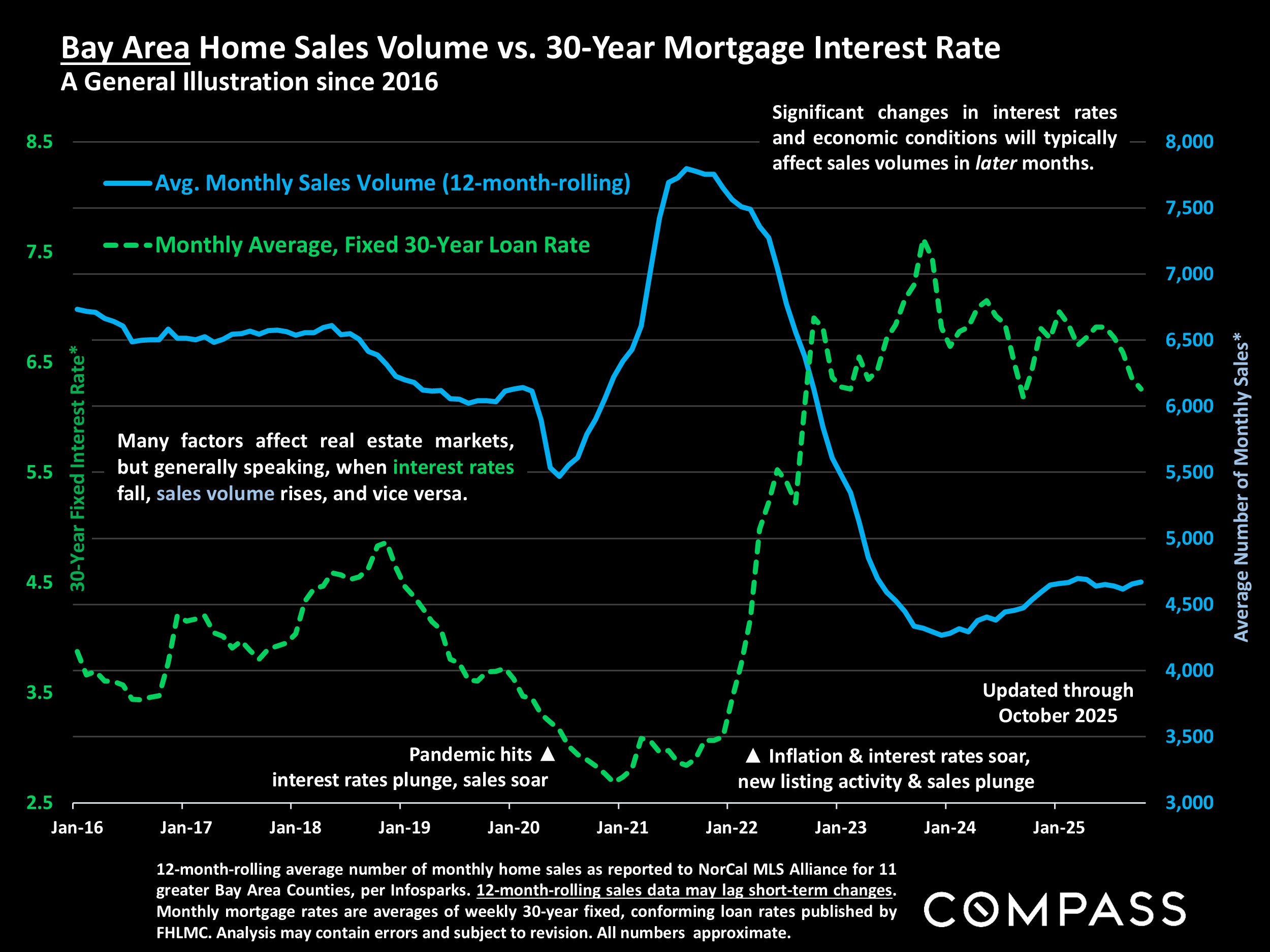
The resulting rise in mortgage rates correlates precisely with a massive slowdown in the Bay Area residential market  as we entered 2022 (chart below).

Mortgage Rates vs Bay Area Home Sales
Bay Area Sales volume vs Mortgage Rates

With that background in mind, many of our statistics are now at or approaching levels they had reached before that 2022 slowdown.  Continue reading “SF Real Estate Heats Up as the Weather Cools Down”

Heat Map of Changes since 2006-2008 Peak Values

Heat Map of San Francisco Median Home Price Changes

Percentage Changes since 2006-2008 Peak of Market
Range from 25% Below to 25% Above Previous Peak Values

August 2013 Market Report

1

This heat map compares 2013 2nd quarter or 1st half median home sales prices – for houses, condos, co-ops and TICs combined – with those at the peak value time prior to the recent market recovery. Previous peak value times vary by neighborhood: typically, the least affluent neighborhoods hit peak prices in 2006 and also fell the most, percentage-wise, during the crash, falling 25% to 50%. These neighborhoods were most affected by the subprime and distressed-property sales crises. The mid-affluent neighborhoods peaked in 2007, and usually declined in value in the 20% to 25% range. And the most affluent areas reached peak values last, in the first half of 2008 prior to the September 2008 crash: Their fall in value ranged approximately 15% to 20% from 2008 peak to 2010-2011 nadir.

Generally speaking, when the market began to turn around in late 2011/early 2012, the last neighborhoods to fall were the first to recover, followed by the mid-affluent and then the less affluent areas. This link goes to our full report and an explanation of the analysis:
Heat Map Report

2All-Cash Home Sales
All-cash buyers come in three main categories: the first group consists of investors buying foreclosed-upon properties, often during trust-deed auctions on the “courthouse steps.” The Blackrock Group alone has purchased over 20,000 distressed homes across the country, which they usually fix up and rent out. Other investors buy, fix up and re-sell, or just buy, wait and flip (as the market recovers). The second category of all-cash buyers consists of people who always purchase their homes without financing: These often very affluent buyers have always been around to one extent or another. And the last category of all-cash buyers are those who prefer to finance their home purchases but have enough cash available to buy without financing: In the hope of winning in a competitive bidding situation, they make all-cash offers in order to appeal to sellers. This link goes to our full report:
All-Cash Buyers

3Homes With and Without Parking
The vast majority of San Francisco home sales include at least one on-site parking space in the sale, and 80% – 90% of buyers put parking on their must-have list when searching for a new home. That doesn’t mean that a home without parking cannot sell at a good price, but it does mean that on average it will take somewhat longer to sell, as well as selling at a lesser price than a comparable home with parking. It’s difficult to calculate the exact value differential between homes with and without on-site parking for a number of reasons. This link goes to our full report:
The Value of Parking

4Renting vs. Buying in San Francisco
We’ve updated two analyses regarding the financials of renting vs. buying in San Francisco. This is the first part of our calculations regarding 2-bedroom units, comparing the median condo sales price with the average apartment asking rent. (We also did one for 3-bedroom houses.) These calculations depend to a large degree on one’s financial assumptions and projections. For our complete analysis:
Rent vs. Buy – 2-Bedroom

5Largest SF Home Sales YTD
Looking at SF home sales reported to MLS by July 31, this chart shows the largest sales by neighborhood for properties selling for $3,500,000 or more. This link goes to our chart on sales below $3.5m:
Largest Home Sales, Chart 2


6Victorian & Edwardian Architecture in San Francisco
In case you missed our recent article using information and photos by SF architect James Dixon, here is a fascinating timeline and this link goes to the complete, well-illustrated article on the different Victorian and Edwardian architectural home styles prevalent in the city:
Victorian-Edwardian Architecture


7San Francisco Transportation Report
We recently stumbled across the annual report of the city’s Municipal Transportation Agency (MTA) and charted some of its most interesting facts. This chart illustrates the (staggering) number of citations issued by violation, and this link goes to all 5 of our charts:
SF MTA Report

How Hot is My Valley

Real Data SF: May 2013 Newsletter

How Hot is My Valley

Noe Valley that is. The place I’ve called home since May 1991 when I bought a vacant two unit building with a monumentally dreary exterior, deeply embedded cat-pee stains in the hardwood floors, and rooms with great volume and light.

This month’s newsletter is dedicated to the Noe Valley market, and the nearby areas of Eureka Valley (aka the Castro) and Cole Valley, which have a similar feel and housing stock. Continue reading “How Hot is My Valley”

The 2012 SF Real Estate Wrap-Up

Happy New Year everyone! As promised, here is a link to Paragon’s comprehensive analysis of trends in the San Francisco residential market and beyond in 2012. You’ll find 19 incredible charts and maps covering a host of metrics and I highly recommend a quick scan of the online newsletter to find the stuff that might interest you. I’m going to cherry-pick just a handful of my favorites to discuss below.

Continue reading “The 2012 SF Real Estate Wrap-Up”

January Newsletter

San Francisco Rankings, Real Estate Prices & Trends, and the Biggest Home Sales of 2012
January 2013 Paragon Market Report

Here is a look at how a diverse group of major and minor organizations have recently ranked San Francisco on a wide variety of important and whimsical measures. Where disagreements existed — 3 different surveys ranked SF as the 1st, 2nd and 3rd “Greenest City” in America, and 2 surveys ranked us as second and third smartest city in the country — we naturally chose the highest grade as most accurate.

The ranking report is followed by some fascinating snapshots of the San Francisco and Bay Area real estate markets.

1

Median Home Sales Prices around the Bay Area

This mapped analysis calculates median prices from both distressed and non-distressed property sales around the Bay Area as reported to MLS. Median price is a very general statistic and many cities include districts of wildly varying value. For example, San Francisco contains neighborhoods whose median prices vary by over $4,000,000: The overall statistic mixes them all up together and comes up with $810,000. Maps with SF neighborhood values are included later in this report.

2

The 2012 Rebound

Exactly a year ago, we suggested that, based upon the changing market and economic dynamics we perceived developing in 2011, the SF real estate market was on the cusp of a major turnaround in 2012, possibly similar to what occurred in 1996 when the market blasted off after years of doldrums. And that is what happened, not only for the city, which led the way early in the year, but for the Bay Area, state and country somewhat later. Note that the SF house median price quoted here for 2012 is for 4th quarter non-distressed sales only.

3

4
San Francisco Neighborhood Values
This map charts median sales prices and average dollar per square foot for houses by city neighborhood. And this link goes to a map for SF condo values:
SF Condo Values Map

5
 
 
Year over Year Changes in Values
Very generally speaking, and depending on neighborhood and property type, SF home values have risen by 10% to 20% over the past year. Here is a chart assessing the surprisingly consistent change in overall SF condo value statistics and this link looks at SF house statistics.
SF House Value Statistics

6
SF Homes Sales by Price Range
One client once called this the “high-heel shoe” graph of San Francisco home prices. One of the big components of the 2012 market was the resurgence in luxury home sales, the chart for which can be found using this link:
SF Luxury Home Sales

7
Sales by Property Type
Gradually, with the addition of the big new developments in the SoMa-South Beach district (and other areas of the city), condos have become the largest single category of property type sales in the city. This trend will only accelerate with the new burst in construction plans. And this link leads to a chart showing the resurgence in unit sales. Unit sales would have been much higher in 2012 if inventory had not been so drastically low:
Unit Sales Trends

8
Distressed Sales: Goodbye to All That
Distressed home sales have been a market aberration caused by the collapse in loan underwriting standards and the refinancing frenzy of the bubble years. Fair market value is defined as “the price a willing, able and reasonably knowledgeable buyer would pay to a seller not under distress.” But bank and short sales radiate distress: underwater sellers, overwhelmed and unresponsive banks; often the physical condition of the homes themselves is distressed. Buyers demanded a huge discount to deal with them. In SF, this market segment was largely confined to the lower price ranges and less affluent neighborhoods. Now, with the market recovery, the city’s distressed home market is rapidly dwindling and should soon disappear altogether.

9
Percentage of Listings Accepting Offers
This one statistic provides the context to everything we’ve seen in the market this past year: ferocious, pent-up, buyer demand met a drastically inadequate inventory of homes for sale, leading to much more competition for listings and strong upward pressure on prices.

10

Median SF home prices vary on some of the charts above, depending on whether the price specified is for both distressed and non-distressed properties together, only non-distressed homes, for the last 4 months of 2012 or for the last quarter of the year, or whether price limits were placed on the analysis (limiting sales to under a certain sales price). This is natural: the statistics will change depending on the parameters of the analysis, and it’s always useful to look at the market from slightly different angles.

Statistics are generalities and should be considered approximations: How they apply to any specific property is unknown. These analyses were performed in good faith with data derived from sources deemed reliable, but they may contain errors and are subject to revision. If you have any questions, please don’t hesitate to contact us.

© Paragon Real Estate Group, January 2013

Real Data: December Newsletter

olives

San Francisco Smorgasbord: A Neighborhoods Sampler

Some time soon, we’ll be doing our annual wrap-up of the SF housing market statistics. And I expect it will be a doozie. But for our November Newsletter, our Chief Analyst Guru Extraordinaire did a survey of various neighborhood values. You can find all the ones he covered here. I thought I’d cover just a few of the highlights.

Inner and Central Richmond. These neighborhoods have recovered smartly since the market crash in 2008. They are now almost back to their pre-crash peaks.

There are some gracious homes in these areas, and at $575 per square foot they represent good value, in my opinion, compared to some of the tonier neighborhoods. This assumes, of course, that you can live with the fog. Compared to 2011, prices have increased 13 to 14 percent.

(Note, we’re using home values from September through November 2012 rather than year to date values in all these charts. We feel this reflects current conditions more accurately, since values were substantially lower at the beginning of 2012.)

Luxury Northern Neighborhoods. Go pretty much anywhere north of California Street and you will find yourself in the stratosphere. Whether it’s Sea Cliff, the Heights (Presidio and Pacific) or the Hills (Telegraph and Russian), this band of presitige neighborhoods has come back with a vengeance this year, with values now up 18 to 20% over the market bottom in 2010. Absolute prices (as opposed to per square foot) are now at new all-time highs.

South Beach Condos. Head south-east to high-rise condo central and the story is pretty much the same, with prices up 15 to 18 percent off their lows. South Beach and Yerba Buena high-rises boast some of the most spectacular views in the city — and you’ll pay for them.

Noe Valley and Surrounds. Back towards San Francisco’s geographic heart, Noe Valley has seen an exceptional turnaround in prices, with homes now selling for more than they did prior to the crash in 2007/2008. The average sales price of a home may be $1.66 million, but expect to pay well over $2 million for one with bells and whistles.

Bernal Heights. A perennial “up and comer,” this eclectic neighborhood kitty-corner from Noe Valley actually saw prices fall slower than more expensive parts of the city. They didn’t reach bottom until 2011. Now, they’ve come roaring back, with prices up 19% and very close to their previous 2007 peak.

A Winter Cooling Trend? Prices and sales volume typically fall during the winter months, especially at the higher end of the market as those who can afford to take off on vacation do so. It’s actually not a bad time to be out looking to buy for that very reason — less competition. This year, however, available inventory is so low that we are predicting a relatively busy winter season.

For charts and tables on even more neighborhoods, read the complete newsletter here.