A Chart is Worth 1000 Words

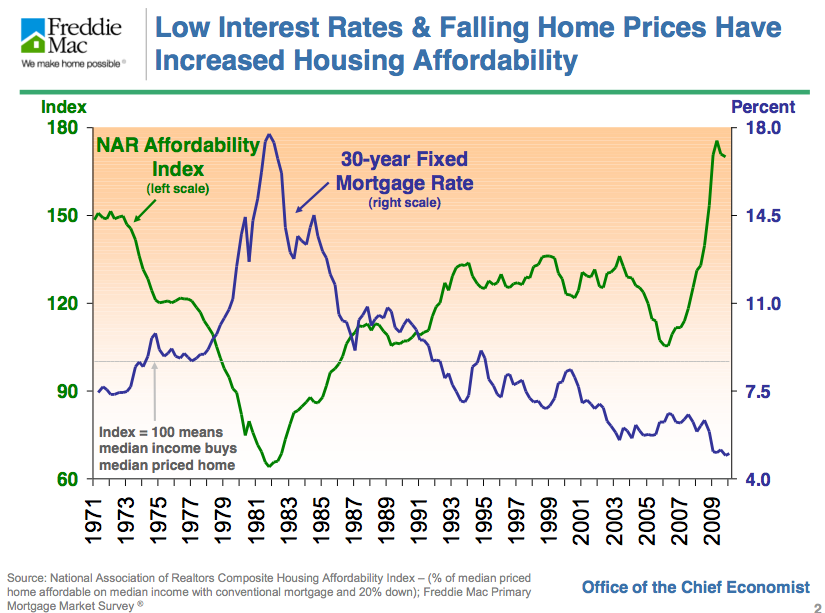
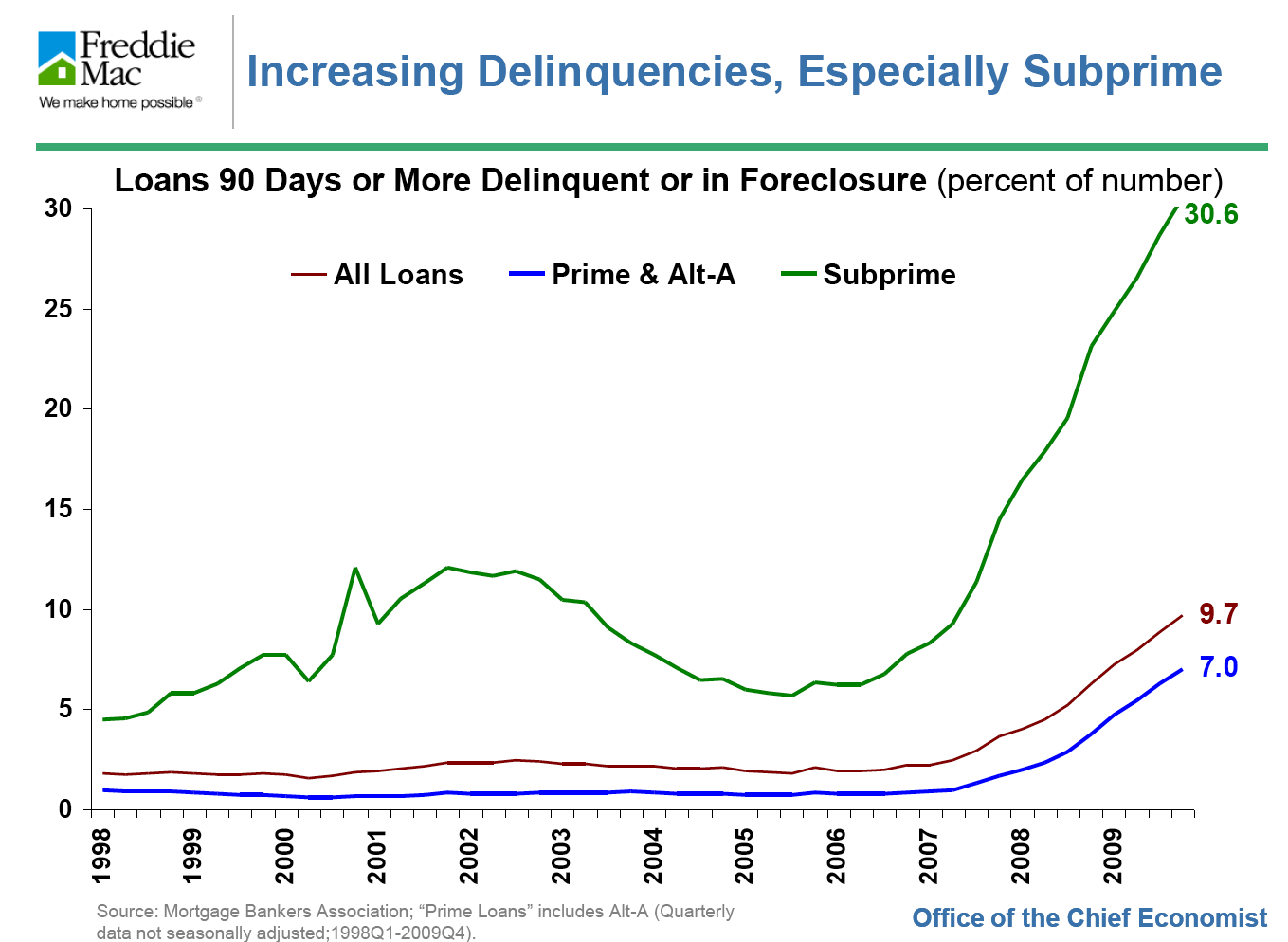
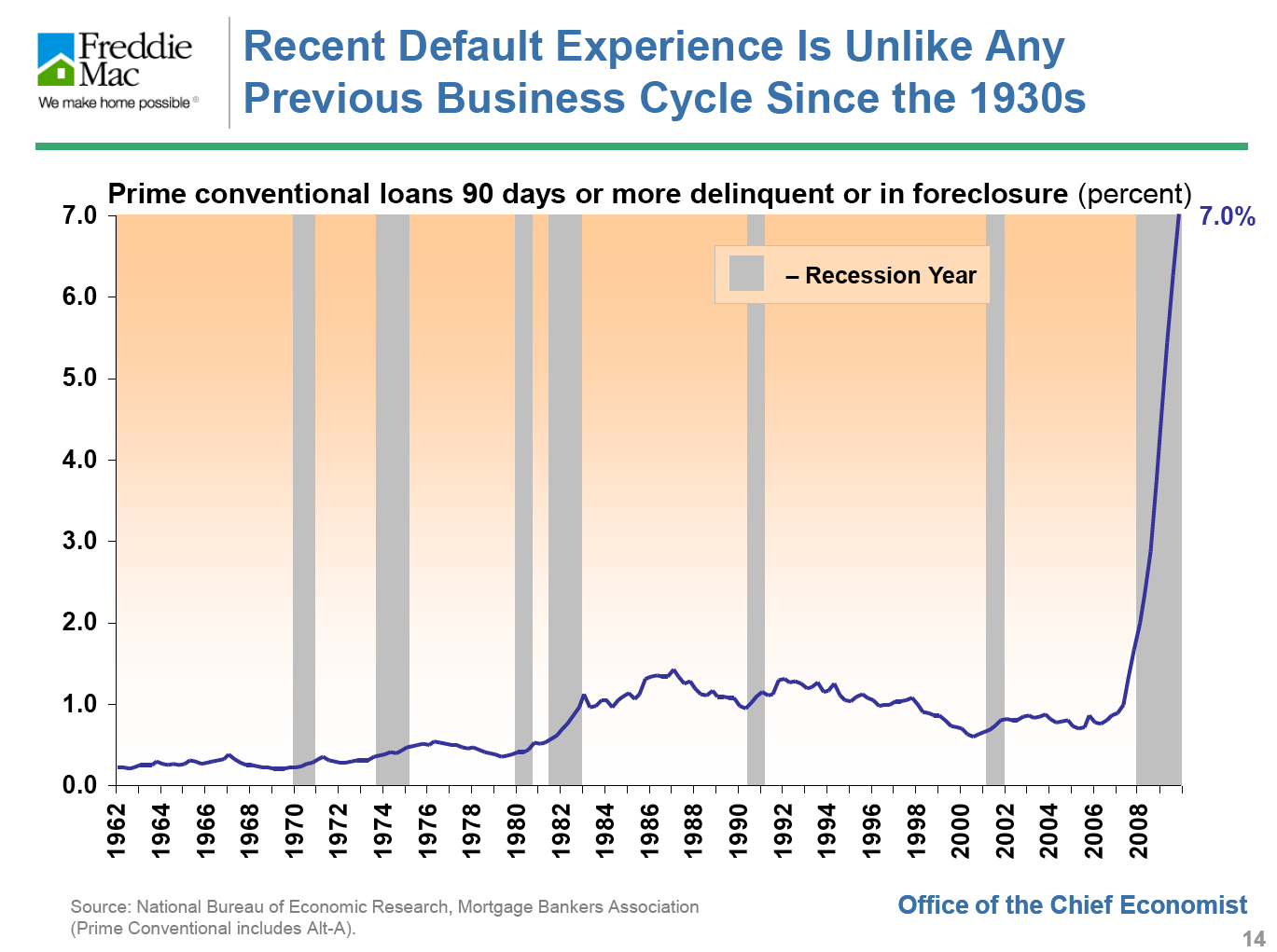
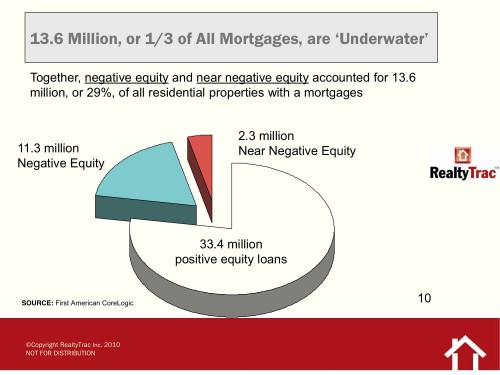
A couple of months ago (gasp!) I promised to post my favorite charts from the UC Berkeley Fisher School of Real Estate and Urban Economics’ symposium on the state of the market.   I then got swamped working on my own development project up in Windsor, north of Santa Rosa, and all my blogging came to a halt.  Without further ado, here are a few of my favorite charts from the conference.  In most cases, I’ll let them speak for themselves.

Delinquency Rates
Foreclosure rates
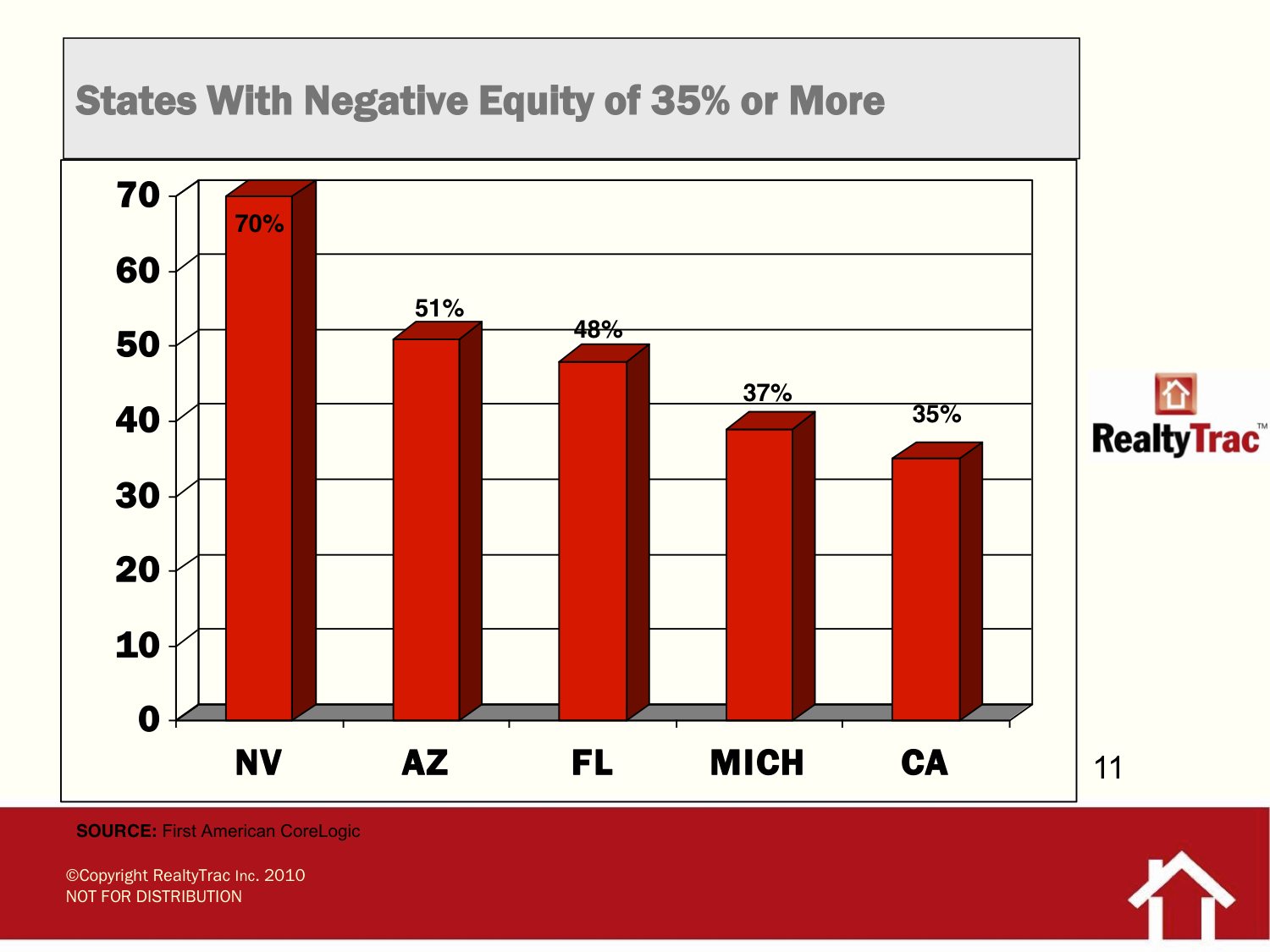
Loans at or near negative equity

Loans Experiencing Payshock

587 Jersey One Year Later

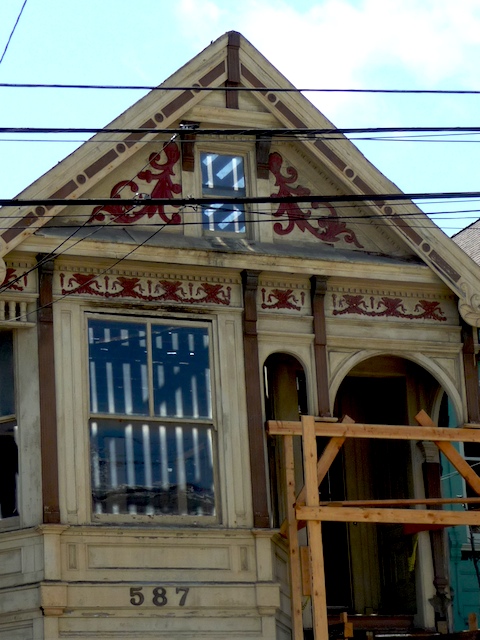
I came across this beautiful wreck during a walk in my ‘hood last autumn and snapped this photo to catch the eerie light through the windows.

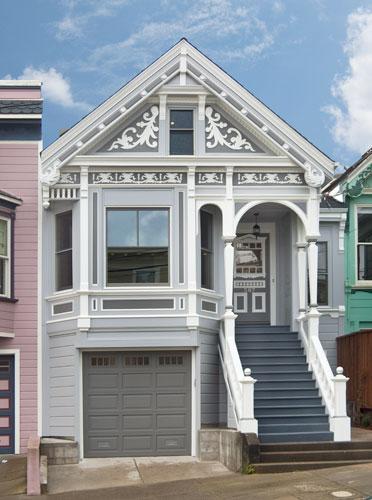
Purchased a year ago for $700,000, the 1300 sf house has grown to 4BR, 3 BA and 2462 square feet.  Voila, the new 587 Jersey, just listed at a slender $1,749,000.  That’s $710 a foot.

I toured the property last Tuesday and to be honest I was underwhelmed.    The developers squeezed the extra square footage into the original building envelope by building out the attic and the basement.  Certainly a good way to avoid all the hassle of neighborhood 311 hearings, notifications, and controversy.  But at the end of the day, you’re still buying a built out basement and a built out attic.  And it shows.

Is Buying a House a Good Investment?

Among the scions of the real estate industry presenting at the Fisher Conference (see my previous post) was none other than Frank Nothaft, Chief Economist and Vice President of Freddie Mac.  He had a doozy of a slide set.  Here’s one my favorites.  More to follow.


The chart shows that nominal (ie. not inflation-adjusted) prices hadn’t shown an actual decline in over 50 years prior to 2006/7.  Real (inflation-adjusted) prices have fallen in previous recessions, though with the exception of 1980-82, those declines were pretty small.  This time round, though, we’re down big-time.

An inflation-adjusted annual average price growth of 1.3% sure doesn’t sound like much to me.  And that number’s not going up a lot even if you discount the suislide of the last three years.  Proof that a home isn’t a “good investment?”  I’ve never suggested that it is.

Doesn’t look a whole lot better even after you factor in leverage.  If you’ve put 20% down, the rate of return on your equity increases five-fold.  Now we’re up to a whole 6.5% gross return.  But that’s before all the expenses of ownership not to mention the endless lists of things “to do.”

Of course, the real reason to buy a home is because it’s about “shelter” in the broadest sense of the word.  It’s as basic as finding a comfortable cave for yourself and your loved ones and painting beautiful drawings on the walls.

Ken Rosen Says “Buy Now”

Image via Wikipedia

Just back from the Fisher Center for Real Estate and Urban Economic’s semi-annual symposium on all things real estate.  (FCREUE is the real estate department within UC Berkeley’s Haas Business School.)

Ken Rosen is the Center’s oft-quoted co-chair and quietly advises real estate investment funds with over $300 million in assets.  Most of the time these symposiums take a very high-level view of real estate:  it’s an asset class to be compared to other assets, and the focus is usually on institutional investors and broad real estate segments.

But with the housing melt-down, recent symposiums have been very much about the lowly residential market, both national and local, albeit within the wider context of the economy as a whole.

Rosen almost always delivers a fact and slide-packed economic forecast. It’s a big part of why I go.  Here are some of his current observations and predictions:

  • The Shape of the Recovery:
    • Chances of a fragile recovery:  55%.  We’ve already had a big bounce; he expects a slowdown for the rest of the year (This is  a broken “W”)
    • Chances of a moderate recovery:  35% (This is the “U”)
    • Chances of a mild recession:  10%, (Think an “L” with a sinking bottom.)
  • Jobs: He thinks the job situation will turn around by the end of 2010 (other speakers weren’t so sure.)  San Francisco has already started adding jobs.
  • Interest Rates:  Rosen thinks that the Fed is already missing the boat on inflation and that it’s inevitable.  Just as important, he thinks that the Fed should already be raising short-term interests, though he thinks it’ll keep them at near zero for another six months or so.

“Two years from now, short term interest rates will be back up to 4%.”

As for 30 year fixed mortgages, if rates go up to 6%, the real estate market will probably still be ok.  If they go to 7%, we’re in trouble.

  • Home Prices. US Single family home sales will look good for the next few months but then will slow towards the end of the year.  Lots of people are coming back on to the market because they see movement and because of the tax credits.

And now the takeaway:

“If you feel secure [in your job], now is a good time to buy because interest rates are going to go higher and prices probably won’t go much lower.”

Oh, and one last thing:  Short China real estate. They’re in a massive bubble of their own.

  • The View From Space: 2010 (pegasusventures.net)
  • No bubble in the real estate – Shaun Rein (chinaherald.net)

Alphabet Soup Revisited: What Shape Will the Recovery Take?

Back in the still-uncertain days of September 09, every market pundit had his or her own letter for what shape the recovery would take. I blogged about Ben Bernanke‘s “U,” Liz Ann Sonders‘ “V,” and Nouriel Roubini‘s “W” here. Though one could argue the jury is still out, I think it’s fair to say that Liz Ann won round one.  The recovery is looking and feeling like a “V”  — and in fact is falling pretty much within historical patterns. (Full disclosure — I had my money on Nouriel.)

I recently spent 20 minutes listening to her most recent webcast, and it all sounds pretty seensible.  What I like about Sonders in particular is that she’s basically a contrarian. So many people are betting against the stock market’s phenomenal rise right now — and in favor of bonds — that she thinks that the bears are refusing to accept the fact that a solid recovery is in place.  I like the way she puts it in a related article:

Skeptics are often the loudest folks in the room, and the bear case is often the more “intellectual” case, but the market has a tendency to reward the minority view, not the majority view.

What’s all this got to do with San Francisco residential real estate?  One of her points touches on a theme that I’ve sounded here recently. As everyone knows, interest rates are likely to rise as the economy starts to strengthen and the Fed starts turning off the easy credit spigot.   Sonders is not predicting the stratospheric rates that occurred in the early 1980’s.  Nevertheless, it doesn’t take much of an increase in rates to have a significant impact 0n the amount of house you can buy.

Say you’re thinking about borrowing $700,000 on a 30 year fixed rate loan at the current rate of 5.25%.  Your payment would be just under $3,900 a month.  Now say that interest rates increase by just half a percent to 5.75%.  Your monthly payment would increase to just under $4,100 a month.  Maybe a difference of $200 a month doesn’t sound like that much:  a couple of fancy restaurant dinners would would cost the same.

But look at it this way.  Say that the the maximum you’ve decided — or the bank’s decided — you can afford to pay each month on your mortgage is $3,900 a month.  Now that half percent increase in rates means that the maximum loan you can qualify for is around $662,000.  That’s a loss of $38,000 in the amount you can borrow and the amount of house you can buy.

It’s also a heck of a lot of fancy dinners.

What’s Better than One New Home-Buyer Tax Credit? Two.

California Route Marker
Image via Wikipedia

As if one new home buyer tax credit weren’t enough, the State of California recently re-enacted and extended the scope of its own version, originally passed in 2009.   As a result, some California buyers can take advantage of both — but only if all the stars align, and only for a short period of time.

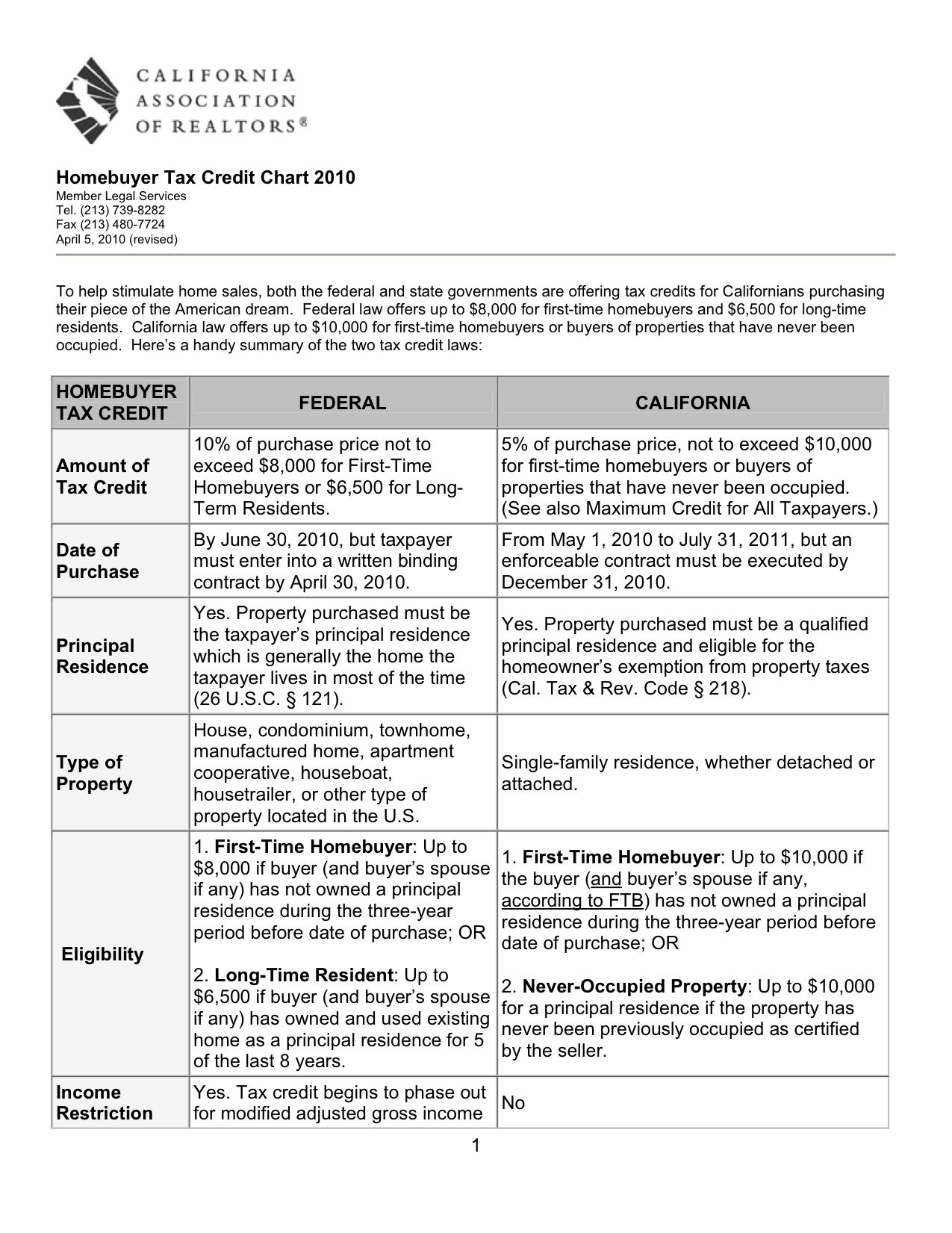
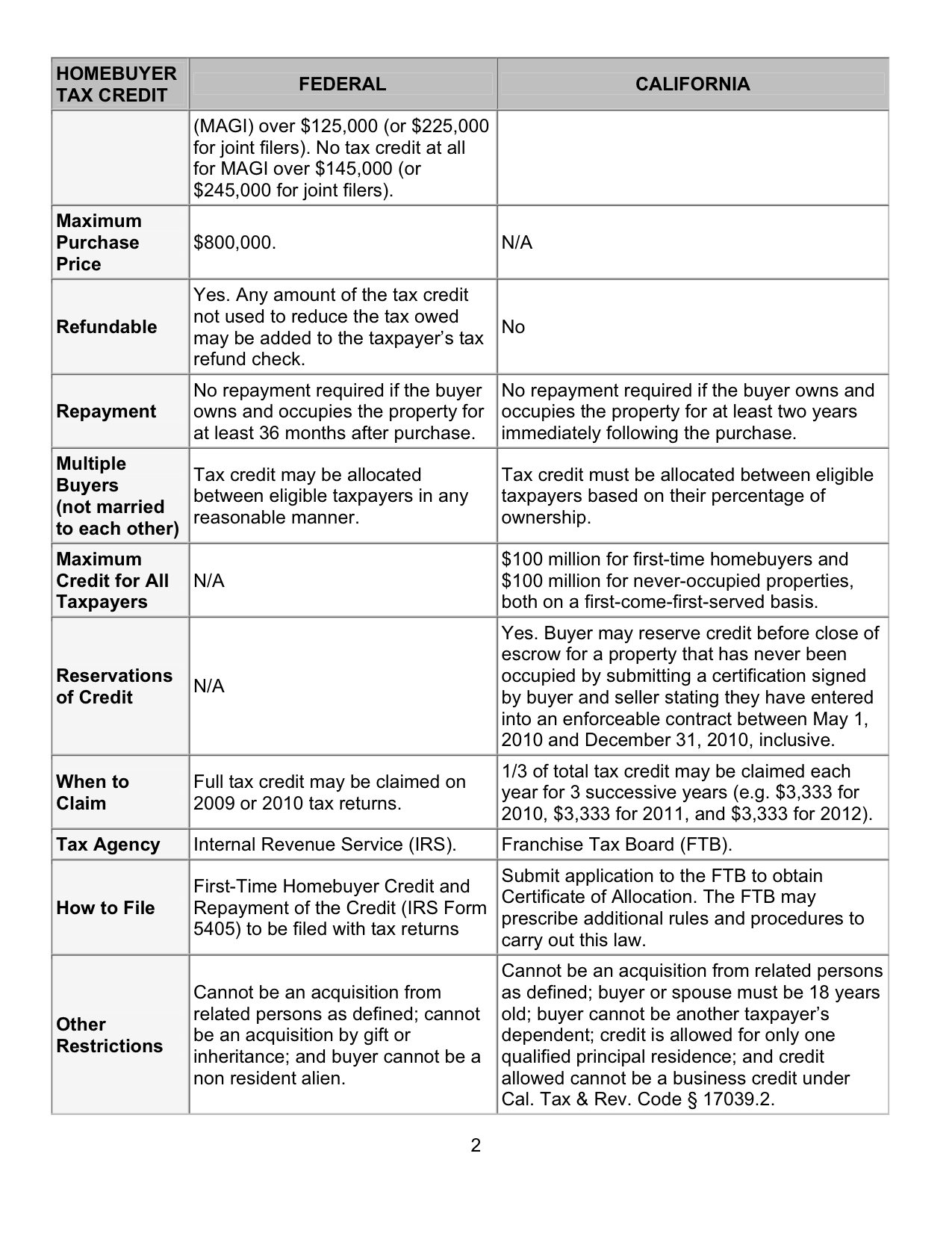
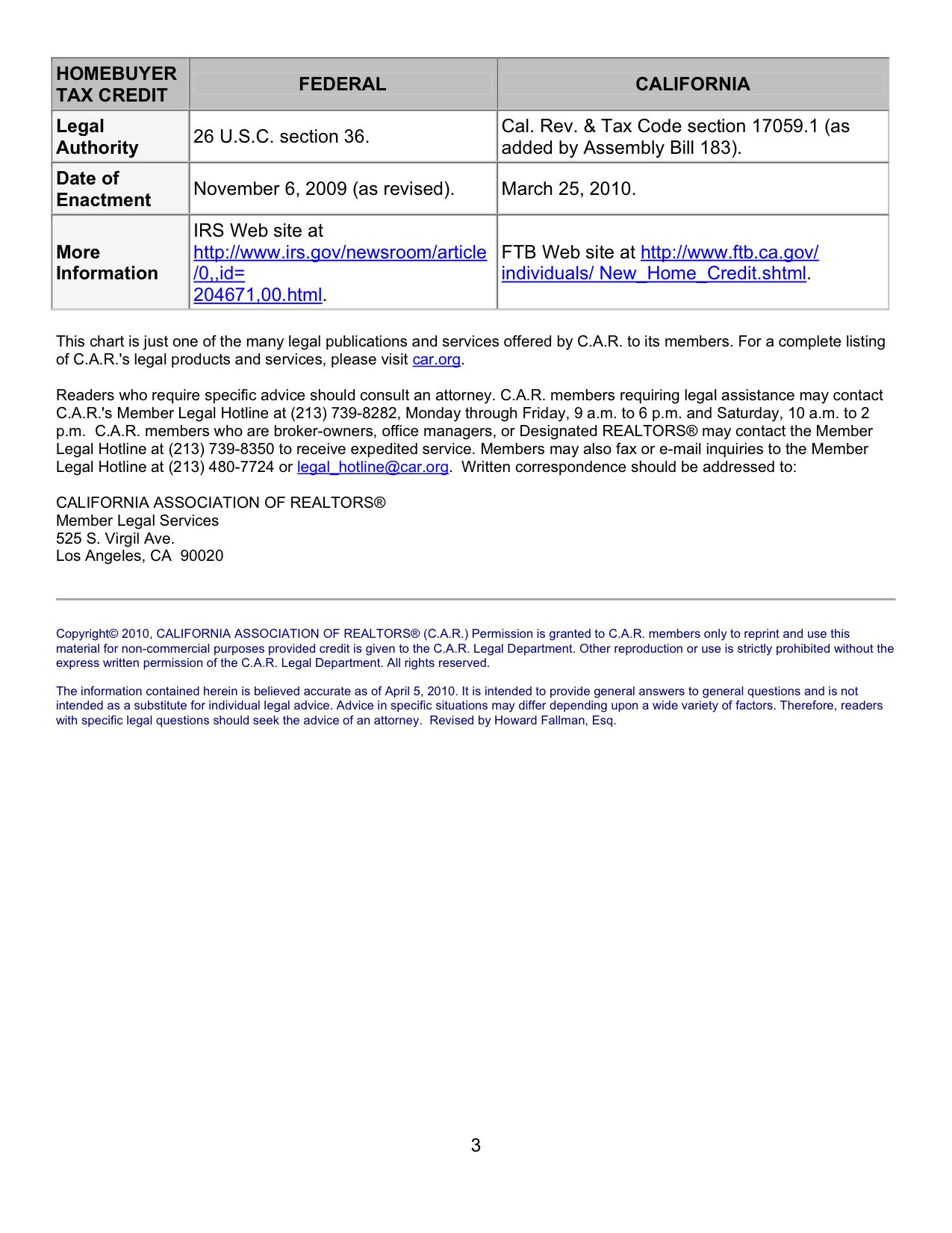
The California Association of Realtors has published a useful chart that compares the two tax credits and I’ve reproduced it below (click to enlarge).

The rules are complicated, (see here for the Franchise Tax Board explanation) but here are a few key takeaways:

  • To take advantage of both credits, you’ll need to be in escrow no later than April 20, 2010 and close escrow no later than June 30, 1010 — these time periods are driven by the federal tax credit.
  • Even if you’re eligible for the full $10,000 California tax credit, you only get to claim a third of it per year for the next three years.
  • Individual filers with adjusted gross income over $125,000 ($225,000 for joint filers) get a reduced deduction under the federal program.  There’s no federal credit at all for filers with adjusted gross income over $145,000 ($245,000 for joint filers).

If you figure SF median home prices at around $750,000, and assuming you could even qualify for a 75% loan and yet be under the maximum income limit, you’d be “saving” around 2.4% on your purchase if you qualified for every penny of both tax credits — less, since the California credit is spread over three years.  18 big ones isn’t small change in anybody’s language, but it surely shouldn’t be enough to drive anyone’s home-buying decision.

  • Time Is Running Out For Buyers To Reserve Up To $18,000 In Tax Credits At Blossom Grove At The Foothills In Carlsbad (prweb.com)

Hanger Steak

And now for something completely different. What’s even closer to my heart than real estate?  Food.

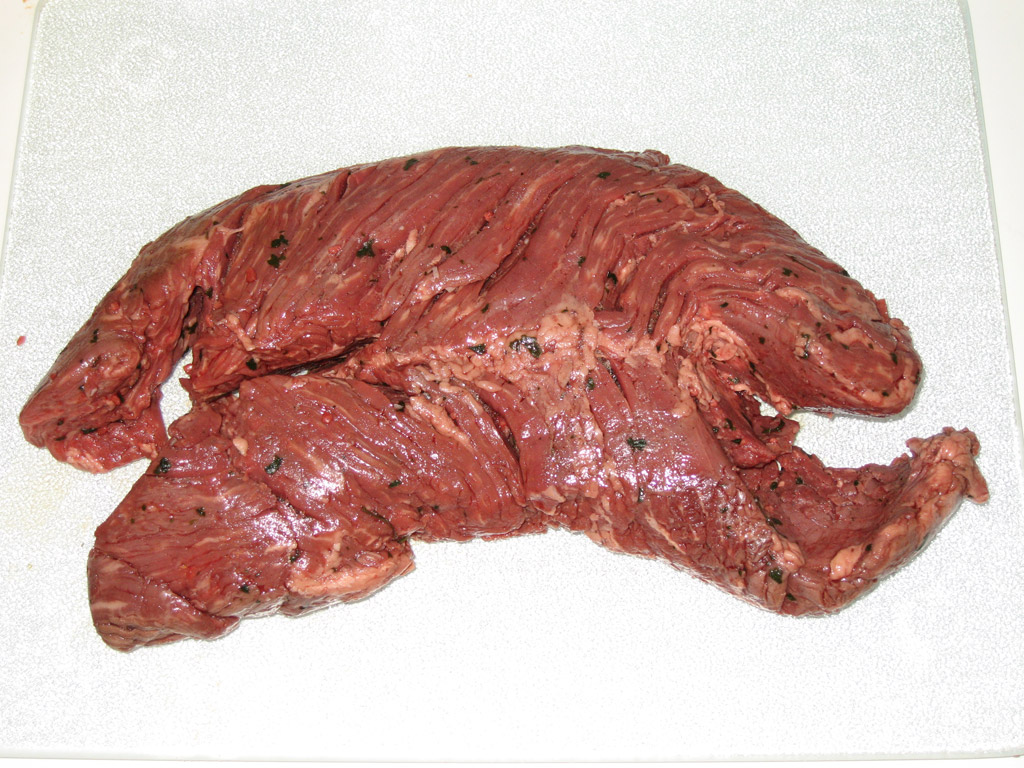
A hanger steak is a cut of beef steak which is said to “hang” from the diaphragm of the steer.[

That’s a meaty description. There’s only one per steer and since it “hangs” close to the kidneys, it’s said to be particularly flavorful.

But cook it for a minute too long and it gets as tough as the hide from which it was parted.

These days, it’s becoming easier to find.  I picked some up at Whole Foods in Noe Valley for around $8.99 a pound.

French bistros serve hanger steak — onglet —  with a shallot sauce, pommes frites, and a pichet of rot-gut red.  My version takes about 10 minutes from refrigerator to table.  The challenge is to really believe it’s cooked after just 90 seconds per side.

Hanger Steak with Shallots

Ingredients (serves 2)
6 oz of hanger steak, in one or two pieces
1 large shallot, finely chopped
balsamic vinegar
¼ tsp beef concentrate
1/3 cup of water
2 or 3 tbs butter, cut into 3 pieces
non-virgin olive oil, salt and freshly ground pepper
a few slices of French or Italian batard

Warm a couple of plates in the oven. Season the meat with salt and pepper. Add around a tablespoon of oil to a heavy non-stick pan and heat until almost smoking.  Add the meat and count to 90 – slowly.  Flip and do the same on the other side. Take out the warm plates, put on the slices of bread and place the meat on top of the bread.  Return to the oven. Lower the heat to medium, toss the shallots into the dry pan and stir constantly for about minute until the shallots are just soft and not burned.

Add a long splash of balsamic vinegar to the shallots and stir quickly. The sauce should get sticky almost immediately.  Add the water and beef concentrate and continue stirring for a minute or two while the sauce reduces.  Lower the heat and stir in the pats of butter one by one.  Pour over the meat and serve.

Case-Shiller Sounds a Cautiously Positive Note

Last week, Case-Shiller released January data for its closely watched national housing index.  Nationally, things are looking up – well, make that flat.  And that’s good news. In the wonderfully backward language of the report, the index’s year over year rate of decline “improved.”  Basically, we are back to where housing values were a year ago.

Since for most of us our homes represent our biggest asset, that’s pretty good news when you consider how bleak things looked back in March of 2009.  Just think of how you were feeling about your 401(k)s.

But before you break out the champagne, consider that national home prices have now “recovered” to levels last seen in Autumn 2003.  That’s over six years of appreciation wiped out.

The San Francisco Metropolitan Statistical Area (that’s 5 of the 9 Bay Area Counties, folks) is up 15.2% from its trough value. Case-Shiller does not break out San Francisco proper from the much larger MSA.  However, I calculate that median prices in January were up just 10% from the lows reached in March 2009.  (I use 3 month moving averages, which approximates the seasonal adjustments the CS Index uses.)  To see how SF did through 2009, check out my blog and charts here.